Jonah 1Bible Study — Verse by Verse (LIVE Replay)
We will discuss the book of Jonah and go through it together to be able to confidently say thus saith the Lord!
We will discuss the book of Jonah and go through it together to be able to confidently say thus saith the Lord!
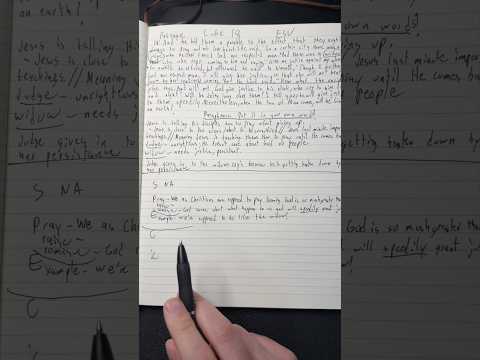
Today we're going to be going through the book of Jonah. Going to be looking at this verse by verse. So when you're doing a Bible study on the book of Jonah, the thing that I always like to look at is what I call the observation tool. So I like you can use a piece of paper, you can use your computer. I have just grown really fond of using the computer because it's just quicker.
So, for my own prep time, it's just easier to go in here, pull up a Word document and put Jonah chapter 1. So, we got Jonah chapter 1 right here. The next thing I like to do is go on blueletterbible.com. Any of these free online Bible studies or a physical Bible is fine. The reason I like blueletterbible.com is because you can actually duplicate these tabs like this.
And I'm going to change translations to where I can just quickly and easily get different Bible translations. If you're watching this stream, I'll go ahead and tell you kind of show you here. So when we have Bible translations, there's really three school of thoughts that we're going to look at. You have well when I say three school of thoughts, there's two extreme ends. So on one side, the Bible translators decide to do thought for thought, meaning they're trying to capture the ideas.
Awesome. Hey, Donna, this I'm actually just doing it. This is my first time ever doing a live stream, so I don't even know if you can hear my audio. If you can hear the audio, can you give me a thumbs up? So you have thought forthought versus word for word. Yeah, ESV is the one my church uses. It's one of my favorites, too. Awesome. So cool.
I'm very happy to hear that the live stream is working. So, the reason why I when I'm doing a Bible study, I like to have three translations open, as you can see, I have ESV open right here, is because when Bible translators are translating from the original Greek, languages have nuances. If you know any other languages like Spanish and English, whenever you're looking at certain translations, there's sometimes not a word for word translation, especially with a language like Hebrew that is very poetic in nature.
And so for instance in James chapter 1 you have a scripture that talks about how if any of us lacks wisdom let him ask God and will be given to you without reproach. Now the original language it actually says God will give it to you without showing his teeth. That's an idiom or a phrase from the culture that makes sense and it kind of makes sense in our language.
You know if a dog shows their teeth it means they're ready to just attack you. So what the original Greek was getting at was God will give you the wisdom without punishment. And so they chose to take a Greek phrase that doesn't really make sense in English and translate it to English. So if you had a literal translation, it actually would probably say showing your teeth.
Well, that's not going to make sense. So the ESV kind of is somewhere in between the thought forthought in the word for word. It kind of tries to do both. As well. And that's one reason I really like ESV. You've got New Living Translation, which is more of a commentary on the scripture. It a pastor actually did the New Living Translation for his children.
He tried to make it as simple as possible so they could understand it and updating the language. And then NASB is just kind of a literal more of a literal translation. And so that's why I have these two translations. But when we're looking at the book of Jonah, let's look here. We've got Jonah verse one. We're going to read the first couple verses here. So now the word of the Lord came to Jonah the s the son of Amiti saying arise go to Nineveh that great city and call out against it for their evil has come before me.
But Jonah rose to flee to Tarses from the presence of the Lord. He went down to Japa and found a ship going to Tarses. So he paid the fair and went down into it to go with them to Tarses away from the presence of the Lord. And so when I'm doing a Bible study, I like to observe what do I see in the text. A lot of when you read the Bible is what I call enlightened common sense.
It's where the Holy Spirit really just helps you to pause to reflect. I ask God to help me to see what's going on here. And so the first thing we have some things that we see. We see the Lord in verse one. So in verse one, what jumps out to me? We have the Lord. So, he's the subject. Oh, I just realized now my face is hiding that.
So, let me move this over. Speaking to Jonah. So they'll know the word of the Lord came to Jonah the son of Amitias saying. And so right away we learn I want to know kind of who is Jonah and he is a prophet. And the next thing I want to look at is to see okay where else in scripture does Jonah come up? And just from previous studies, I know that he was a prophet to Jeroboam II.
But let's say you wanted to know where else Jonah pops up. On Blue Letter Bible, when you click a verse and hit tools, you can go down to the word Jonah and open it up, it'll show you all the places in scripture where the word Jonah comes up. And here we go. So in second kings we said he restored the border of Israel from Leobo Lebo Hoth as far as the sea of the Arabah according to the word of the Lord the God of Israel which he spoke by a servant Jonah the son of Amiti the prophet who was from Gethpher.
Now when I click on this I'm not going to just slow we're not going to do a verse by verse of second Kings. So I kind of tell you what's going on. So, in the background, just just in looking up the word of Jonah and who he was, we now know what's going on. And what's going on in Second Kings, I'll briefly tell you. Israel is not in a good place.
They are in rebellion against God. Jeroboam II is the king at the time of Jonah. And God uses Jonah to help Jeroboam II reclaim land for no reason other than God said, "I will not li allow Israel to be completely conquered." Jeroboam II was a wicked king. It tells us in second kings he did not depart and how the phraseology here says in Jerobom I he did not depart from all of the sins of Jeroboam the son of Nabi which made Israel to sin.
So was going on is they had child sacrifice going on. They had idols in their households. They were just not living up to the holy standard of what God had called them to be. So the background, Israel is an open rebellion against God. So we go back to Jonah and that's extremely important because a lot of times when people look at Jonah, they look at a person.
But as we as I've already mentioned here, Jonah is a prophet. When something happens to prophets in the Bible, it's never about the individual person. It's about the nation as a whole. Prophets were anointed, meaning they were given God's spirit for a purpose and they were sent to the people. So the story, the overarching story of Jonah, it's about God and the nation of Israel. Because as we're going to see when we get to the end of Jonah, Jonah is very angry with God.
And it's it's important to keep in mind that Jonah is speaking on the behalf or God is speaking through Jonah on the behalf of Israel. So, one other thing of background that's important, I think, to unlocking the key of Jonah is who what was Israel called for? So, God chose the nation of Israel and he even says, "I chose you not because of your strength. I chose you because you were the least of all of the nations."
So, God chose a weak people. He made his strength in them and then they became a prosperous nation. And God chose Israel because they were supposed to be his holy people meaning set apart. They were supposed to live so differently to the world that the world would look at the nation of Israel and they would know that there is a true God. Their purpose of Israel being called and sent out into the world as the holy people was not so Israel could just sit there and pat themselves on the back.
It's so that other people in the world could convert to serving the one true God. So they were a holy people. God chose to manifest his holiness to the world so that people would repent. Israel is not doing this. Something else really interesting as we look now we're going to go back to verse by verse looking at Jonah. Kind of having that background. I do that at the beginning of book of the every book of the Bible that I go through.
I like to just do a background to refresh my mind of okay, where we at with the whole story of God's redemption to the world. So Jonah is called by the Lord and he wants Jonah to go to Nineveh. So what does God say? He tells Jonah to go and preach out against it. And the it is Nineveh. And when we look at Nineveh to us, awesome.
I'm glad that's helping. To us, when we look at Nineveh, or at least me when I used to first look at Nineveh, they were they were nobody to me. I mean, okay, Nineveh, it's a place. So, I had to look up and see, okay, what is Nineveh? So once again, I'm on blue letter Bible. I hit tools and I go over here to the Strong's concordance and I click it.
And you see Nineveh actually comes up a lot in blue letter Bible which tells us all the places it's used in the Bible. You have the outline of biblical usage. It is the capital of Assyria. So, I'm gonna put that in my notes if I was going to do a Bible study on or even for my own personal usage. Nineveh equals capital city of Syria. Now, once again, I've already done a study on this before, but if you wanted to see what was going on between Israel and Nineveh or Assyria, they were at war with each other during this time.
Not only are they at war, Nineveh is known, we know through historical and archaeological records, they were a people who had really mastered the art of war. In other parts of the Bible, when you look at Kings, first, 2 Kings, you see that they just love to conquer people as grains of the sand. It says they just like to conquer people just to show off their strength.
And how they would lead people as they would conquer a nation is they would actually put fish hooks in the nose of the people behind them. They'd strip you naked and then they would march you in front of the other person tied with the fish hook to it and relocate you to another part. So, think of, you know, if you're in American culture, we were taught about the Trail of Tears.
Think of Trail of Tears, but on steroids. It was extremely barbaric. And these people were conquering Jonah's kinsmen. He had would have known personal people who had been conquered by these people. These are not just nobodyies to Jonah. These are Jonah's enemies. These are people who have killed who would have killed people who are very close to Jonah. And so it's a nation, it's a nation who has killed and tortured many of Jonah's people.
And for me, that really just humanizes Jonah's response we're going to see here. If there was a number one enemy in the entire world to Jonah, it would have been Nineveh. And here God is telling Jonah to go to them. So then we get Jonah's response. But Jon, and this is back at verse three, chapter 1, verse three. But Jonah rose to flee to Tarses from the presence of the Lord.
He went down to Japa and found a ship going to Tarses. So he paid the fair and went down into it to go with them to Tarses, away from the presence of the Lord. So anytime you're reading the Bible, when something is repeated twice, it means it's really important. When something is repeated three times, it means you really, really need to pay attention. There's a twice is emphatic in the language. Three times is almost like siren should be going off here.
This is extremely important. Whatever is being communicated to us. So God tells Jonah, "Go to Nineveh." Jonah gets up and sets out in his heart to flee to Tarses. Now, if I'm looking at this, it's the first time I'm ever looking at it. I have no idea where Tarsish is. I have what's called a it's like scholarly maps. It shows maps of the area. Unfortunately, it's a book and if I showed it on the camera, it wouldn't look really good.
It'd be blurry. Give me one second. I'm going to see if I can just pull up a map of Tarsish. Because when you have the geography of what's going on in Jonah and about where he's trying to run away to, it's almost comical. Okay. Yeah. Yeah, I got one here. This one's pretty good. So, all I did was Google it and it had a pretty good picture here.
And I'm going to pull it. I'm going to see if I can copy and paste this image. Sweet. Yes, I can. All right. So, The stream's getting delayed. But anyways, we'll keep going here. It seems like the stream is about 30 seconds delayed from where I'm actually am. So, if you put a comment in the chat, it's a little delayed. So, I'm just going to keep talking.
I'll look at the chat every so often. So, here we have Japa. That's where Jonah is. Here we have Nineveh where he was called to do and where Jonah had set in his heart to run away to is all the way over here in Tarses. Actually, as I'm looking, it doesn't look like you all can see this map. Well, let's do something else. Okay, so the map did show up.
Great. I opened up a new window, so I didn't know if it would. So, why that's important? This is the area of Spain. This is the end of the known earth at the time. What this is communicating to us is Jonah to try to run away from the call of the Lord ran to the end of the world. He's trying to get all the way to the ends of the earth because he thinks maybe if I can get far enough away, God won't use me for what I'm trying to do.
And we can look at that and think, it's easy to think, wow, how how can you be so foolish, Jonah, to think that you can get away from what God has called you to do. But no one had ever tried that before when you go through all the other prophets. So, this would be also a fun study to do. I'm not going to do it right here because it take about 10 minutes.
But any other prophet we see in the Bible, when you look at Samuel, when you look at Elijah, when you look at Elisha, when you look at Nathan, when you look at all of these prophets, David, when he's anointed, their response to God is here I am, Lord, use me. Jonah is the only prophet when he gets a word from the Lord says, well, actually, he doesn't say anything.
That's that's also an amazing thing, too. God speaks and Jonah doesn't say a word but instead sets plans in his heart thinking maybe if I run away from God far enough away he won't make me do it make me use it and so you know it was no one had ever set a precedent before it may seem silly to us because how could you escape the Lord's presence he thought well I might as well try it So we're in verse I think that's in verse three.
Yeah. So verse three. I'm just going to write down everything I observe as Jonah. So Jonah doesn't answer God. We really don't know yet what's going on in his head. All we know is he had already set plans to run away. So Jonah doesn't answer God and instead sets to run away to the ends of the earth. And that is Tarsish as my evidence for why I'm saying that.
You could also just click Tarsish in Blue Letter Bible and it would kind of tell you some of those things. And we know he's just trying to get away from the presence of the Lord. Then we get to verse four. But the Lord hurled a great wind upon the sea, and there was a mighty tempest on the sea, so that the ship threatened to break up. Then the mariners were afraid, and each cried out to his God.
And they hurled the cargo that was in the ship into the sea to lighten it for them. But Jonah had gone down into the inner part of the ship and had laid down and was fast sleeping. So the captain came and said to him, "What do you mean, you sleeper? Arise and call out to your God. Perhaps the God will give a thought to us that we may not perish."
So a lot going on in these three verses. And so as I observe these verses, we're just going to do them in a section together. Trying to figure out the best way to make it where I can see the verses while typing at the same time with only one monitor. There we go. And I just like this. For me, a lot of people will claim, "Oh, Matt, you just have a really good memory because you remember a lot of the Bible."
I don't think it's I have a great memory. It's I kind of paraphrase as I go through scripture and put it in my own words because I'm a lot more likely to remember my own thoughts than I am to remember how certain authors write. So, when I can paraphrase a scripture in my own words, it actually helps me to have a what I call a working memory of it.
Meaning, I can recall it like that. So verse six, after Jonas tried to run away, Lord hurls, a storm the ship when it threatened to break up, it's about about to break about to sink. We've got some sailors who are terrified and they are calling out to their gods little G. So, as you're using blue letter Bible, I'm going to give you another really important thing to notice, and this is actually in most Bible translations.
If you'll notice here in Jonah verse one, ver chapter 1 verse 3 and 4, the word Lord is all capital, but then when you look at verse five, it has God with a little G. Well, why is that? And so when you go to the tools here, when you're looking at blue letter Bible, it's using the covenantal name of God right here. It's called Yhovah. That is the God of Israel, the one who entered into covenant with Abraham, with Moses.
It's the covenantal name of God. So there it's the name for the one and true God. But when we get to verse five and we see God, I'm pretty sure it's Elohim. Let me double check. Yeah, it's Elohim. What that means is they're just crying out to any god that they can think of because there's so many gods in the area. They're probably calling out to Dega, which is would have been the god of fish.
They would have been calling out to Baal. They've been calling out to all these other gods hoping that maybe one of these gods will have mercy on them as they don't want to drown. So they're just crying out. It would have been quite the skeptical. It would have been quite the really kind of a funny scene just to see them just just crying out over and over again saying, "All right, this God save us.
This God save us." And then they go down and they see that Jonah was asleep while there was a storm going on right outside. So we see Jonah is asleep. And so then I'm going to paraphrase these section of scriptures from my own paraphrase this section of scripture in my own words. We have a wayward prophet that God is rebuking. God is a jealous God. He's going to come after you.
And he has given Jonah his marching orders of what he's supposed to do as a prophet and he's not doing it. And so God is coming after him. So, we get to verse 7 through 7 through 10 here. And they said to one another, let me make sure this is away from where my head is. And they said to one another, "Come, let us cast lots that we may know on whose account this evil has come upon us."
So they cast lots. And the lot fell on Jonah. Then they s they said to him, "Tell us on whose account this evil has come upon us. What is your occupation? And where do you come from? What is your country and of what people are you?" And he said to them, "I am a Hebrew Hebrew and I fear the Lord, the God of heaven, who made the sea and the dry land."
Then the men were exceedingly afraid and said to him, "What is this that you have done?" For the men knew that he was fleeing from the presence of the Lord because he had told them. So verse seven, Jonah has been singled out and the sailors ask certain questions. Let's take note of what they ask because it can be really easy to just glance over this without really looking into what they're saying.
So they ask, "Tell us on whose account this evil has come upon us. Why is this h I'm going to say it in my own words. Why is this happening?" Question one. Question two, what do you do for a living? Question three, where are you from? What nation do you claim to be na to be? Because you can be born somewhere and you know grow up somewhere else and identify as a different country now.
So it's a fair question. And then who are your people? Let's see how Jonah answers here. He says, "I am a Hebrew. I fear the Lord. And that's it. I mean, he gives glory to God. He says, "The God of heaven who made the sea and the dry land." I think that's one of the most beautiful answers he could have possibly g to be given. So he a he doesn't answer each individual question.
What do you do for a living? But what a beautiful answer that is. I am a Hebrew and I fear the Lord. That's his identity. He's not defined by his job. He's not identified by who he thinks his people are. He just he just cuts to the chase. This is who I am. I'm a Hebrew and I fear the Lord. Now, if I were to do some application here, which I'm I'm not going to spend a great deal of time doing application since we're doing a Bible study, but how amazing would it be as Christians if when people ask, "Hey, what are you know, what do you do for a living?
Where are you from?" if our answer was like Jonah here of my identity is I'm a nurse by trade but my livelihood and what I do for a living is I fear the Lord. And fear is one of those I would say that's like a Christian word where it can be easy to hear a lot but not really understand what it means. And so if I was doing this for the first time, I would once again click on tools on verse 9 where he says, "I am a Hebrew and I fear the Lord."
I would have to look up the word fear. Because you know from the world when I think of fear, you know, I think of a dog that's shivering, shaking, trembling whenever he's in trouble. But I would want to know, okay, is that actually what fear means? And if you were to click this word, it'd get into it. And I'll kind of just tell you here what the word fear means.
It means a reverential awe. It means that you recognize God as the one who's author. He's the creator. He has all power. Everything falls under his jurisdiction. It's a respect. Because if you fear something, you respect it and it leads to action. And so Jonah, even though he's running from the Lord, he still recognizes God as his God. And God's still going to use them.
Which that there's another scripture if I were to summarize what this a scripture that I think of as I look over this. There's a scripture that says God is faithful when we are faithless. And this is almost like an object lesson of that being lived out in real time where Jonah is not being faithful right now, but God is faithful. And so what he wants to happen is going to happen.
And we're gonna see by the end of this, God is so patient with Jonah because Jonah, I mean, can you imagine if you had a child and you say, "Hey, go take out the trash." And instead of taking out the trash, they decide to start running down the street to get away from your call. That's so disrespectful and so rude. And yet here, God is just sending a storm to wake up Jonah.
And so even with Jonah being asleep when his life is on the line, I think is a perfect illustration, a physical manifestation of what's going on. Jonah is asleep, not only physically, but he's asleep spiritually. He isn't serving God. And we get this storm that's coming to wake him up. But God doesn't waste the storm. Even in the storm, we see some sailors who are about to come to salvation.
All right. So, now we get to verse 11. And this is where the story gets so it gets so beautiful. Hold on, let me shrink this so you can see it a little better. Then the men were exceedingly afraid and said to him, "What is this that you have done?" For the men knew that he was fleeing from the presence of the Lord because he had told them.
Then they said to him, "What shall we do to you that the sea may quiet down for us?" For the sea grew more and more temptuous. He being Jonah said to them, "Pick me up and hurl me into the sea. Then the sea will quiet down for you, for I know it is because of me that this great tempest has come upon you." Nevertheless, the men rode hard to get back to dry land.
But they could not, for the sea grew more and more temptuous against them. Therefore, they called out to the Lord, "Oh Lord, let us not perish for this man's life." and lay not on us innocent blood, for you, oh Lord, have done as it pleased you." So they picked up Jonah and hurled him into the sea, and the sea ceased from its raging. Then the me men feared the Lord exceedingly, and they offered a sacrifice to the Lord and made vows.
So we'll just say through verse 16 now. Jonah says, "Throw me into the sea." Because he recognizes his disobedience is why this is happening. And the sailors don't immediately throw him into the sea. They start to they set out to paddle to land without throwing him overboard and then but they eventually do. And why I brought up the names of how they said little remember back in verse five they said little G God.
They they were just crying out to different elohims, different names of God, probably the fish god, the sea god, all these other gods. In verse 14, something has changed in how the sailors are speaking. They're no longer saying God. They're using the coven covenantal name of the Lord. They're crying out Jehovah. They're crying out on the God of Israel, the one true God. And they're afraid to throw him over because they fear God.
They fear the Lord. Because if the Lord is going to send a storm to get a wayward prophet, what are they going to do to the men that throw them? What is he going to do to the men that throw him overboard? So they're they are afraid that if God is so powerful and he's willing to literally make a storm come for a wayward prophet, how much more to these guys who don't even have not given their life to God.
But something amazing happens in verse 16. Then the men then the men feared the Lord exceedingly and they offered a sacrifice to the Lord and made vows. These sailors who would have been pagan sailors by the end of Jonah's excursion give their life to God and they convert. One prophet's weward disobedience God uses to bring the salvation of these sailors. So, it's just amazing to me that God just doesn't waste anything going on in this story.
He wants Nineveh, the city of Nineveh to repent, which is about 600,000 people we're going to learn here in a little bit. But even on the way there, he stops and pauses and cares even about these men's lives. And so that's just a quick paraphrase. I will I think I'm about to wrap up here. There's one other thing and then I'll take questions. If you guys have any questions about what we've gone through here.
In Jonah 11:17 it says, "And then the Lord appointed a great fish to swallow up Jonah. And Jonah was in the belly of the fish three days and three nights." This is something that if you don't really study languages a lot, you're going to miss this. But it's something that's very important to the story of Jonah. So when I when I look at fish here, it's d a g.
Did that come up? Okay. Fish. Now hold on. When you get to chapter 2, it's a really strange how they decided to break up the Jonah, the end of chapter 1 to chapter 2. But when you get to the chapter two, it says, "Then Jonah prayed to the Lord his God from the belly of the fish." It's deega. And so I was seeing if it says here.
So, okay, good. It does say here. So, Dega is feminine, meaning it's the female fish. D A G is male fish. I was seeing if it Yeah, here it goes. Masculine. I've seen if it says it in here, the speech. All right. And you may be thinking, okay, why does that matter? Why outside the belly of the fish? Is it male fish? But then the author, every time the word fish is used in chapter 2, is female fish?
Because the author is making a poetic decision to show what's going on inside the belly of the fish. So the author who Jonah wrote the book of Jonah, but the author intentionally used the masculine noun outside the fish and the feminine noun inside the fish because what can women do that men can't? Women can give birth to new life. So what happens? It's a commentary on what happens in chapter 2.
Jonah is outside the fish and he hasn't been given new life yet. But when he cries out in chapter two, Jonah actually receives salvation and is born again. And I'm going to give you a little sneak peek for chapter 2 whenever we look at it. I'm going to go live later in the week but in chapter 2 he talks about salvation to the root. And so Jonah cries out this beautiful prayer which we're going to break down and but here's a section of in chap in chapter 2 verse 6 to the roots of the mountains I went down to the land whose bars closed upon me forever yet you brought up my life from the pit.
Oh Lord my God when my life was fainting away I remembered the Lord and my prayer came to you into your holy temple. I'm going to skip a few verses, but I would think with the voice of thanksgiving will sacrifice to you what I have vowed I will pay. Salvation belongs to the Lord. There's a lot of poetic language going on in chapter 2 here, but what he's what this is essentially getting at is when Jonah was dying in the belly of the fish, he cries out to God and God gives him salvation.
And so it's just a really beautiful picture of what then continues to happen. I'm about to take some questions now if as we've been going through any questions on kind of how to look at verse by verse in Jonah or Blue Letter Bible. Well, and Donna, thanks for tuning in. I was, like I said, this is the first time I've ever tried live live chatting.
It's a little I got to figure out this whole phone setup and how to look at it while looking at the scripture. Yeah, I didn't think anyone would be on today. I was just kind of going to play with it and get it figured out, but I'm glad you were able to tune in. Yeah, I'll even kind of show you what I do. Like I just have the one thing I would say to look at that will really help with the story of Jonah as a whole is Jesus said to this generation no other sign will be given other than the sign of Jonah.
And he's talking to the Jewish people. So the story of Jonah has a huge typological and what that means is the story of Jonah is pointing to Jesus and his coming. And so understanding Jonah really helps to understand more about Jesus and how he saved us. So let me pull up that scripture. No other sign will be given other than the sign of Jonah. Matthew 12:39.
For just as Jonah was in the belly of the fish, so will the son of man be three nights, the men of Nineveh will rise up at the judgment and condemn it. And I'll give a little sneak peek here because I do, like I said, Jonah is such a great account of what happened. So, we'll look at Jesus's ministry. So, I'm thinking about how I want to do this with just the So, here's kind of I call this taking a million mile glance at a section of scripture. When you can read chapters all together in one sitting, you can really make an easy paraphrase of everything that's going on.
So Jesus comes, he preaches, Israel rejects it, Gentiles save, we get Acts chapter 2, Pentecost, and it goes out to the world. And Pentecost is so important because we look at it and we say, "Oh, wow. 3,000 Jewish people were saved at the day of Pentecost. You think 3,000 is a huge number, but when you look at the Jewish people that would have been in Israel who would have heard the message on the day of Pentecost, it would have been 600,000 Jewish people.
And that's the conservative estimates. They actually think there are probably more like 2 million. I just like to go with conservative because it makes the numbers less impressive, but it's still impressive. So when the day of Pentecost happened in the book of Acts, 3,000 Jewish people repented out of 600,000. That when that happens, it means only a remnant is saved. When a remnant is saved, it means rejection as a whole.
And so the sign of Jonah, Pentecost happens, and they're saved. Jonah comes. We see him prophesies to Israel, Israel, and second Kings. Israel rejects and then finally he goes to Nineveh. So there's a lot of parallels between the life of Jonah and how he's pointing to when Jesus comes and what's to happen once and for all. So this is a good little graph to keep in the contact.
We're in Jonah comes. We're in chapter one right now. And by the end of it, we're going to get to chapter chapter four of Jonah. We'll see how Nineveh gets saved. But that's just a sneakshot snapshot of what's to come. Sneak peek. That's what I was trying to think of. Sneak peek. All righty. Well, thank you and I will end the stream here and I'll what is today?
Thursday. I gotta decide what day of the week. I'd like to go live once a week and just continue the study. I need to set a time and a day to where it's easiest for people. I'll make a community post on YouTube. It should pop up in your feed if since you're subscribed and it'll say what I'll I'll give it a it'll be every week, same day, same time. And I'll put that in the post tabs and have it on there. Absolutely. We'll do it soon. Thanks, Anna. Bye bye.
Transcript from YouTube's automatic captions, lightly tidied. Watch the full video on YouTube.
Subscribe on YouTube so you never miss a Bible devotion or Bible study.